When architecting AI features in enterprise systems, engineering teams inevitably face the core question: Should we fine-tune a model, build a RAG vector pipeline, or simply dump our raw data into a million-token context window?
Each approach addresses fundamentally different challenges. Conflating them leads to wasted GPU training cycles, brittle vector search latency, or runaway inference bills. Here is an empirical decision matrix based on production benchmarks.
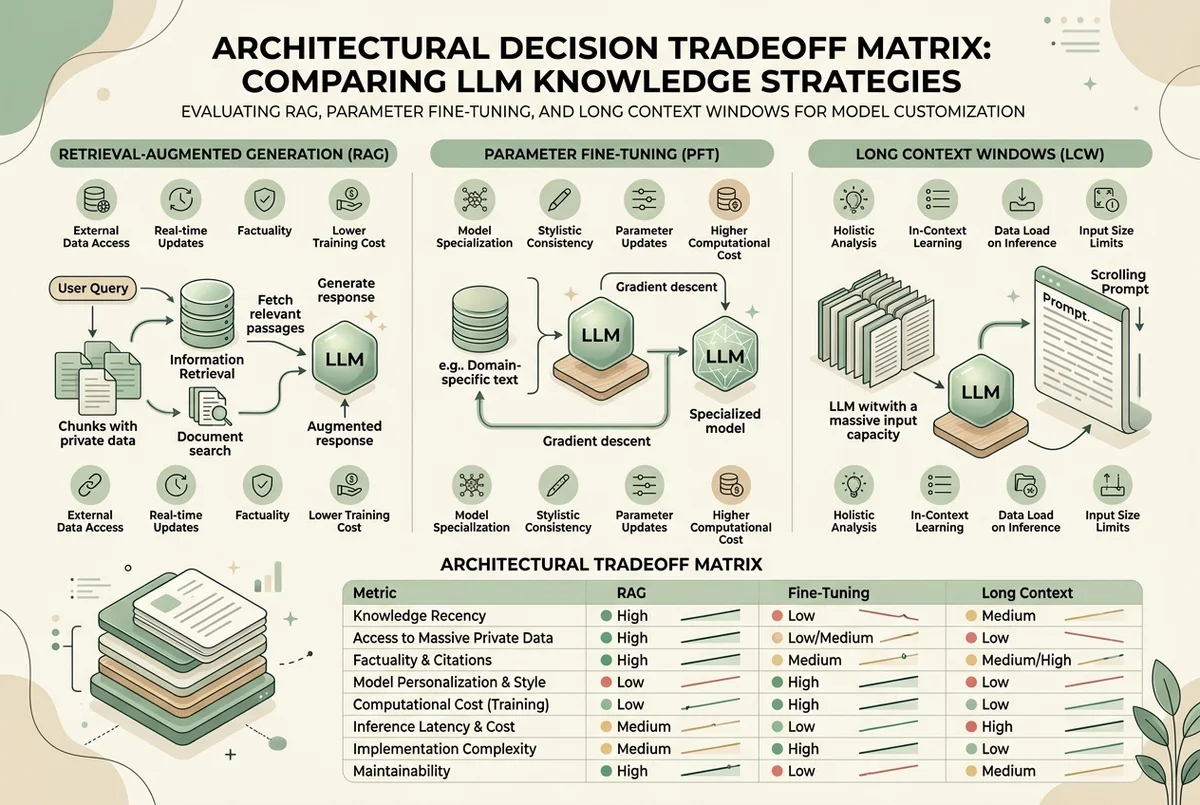
The Three Paradigms at a Glance
- RAG (Retrieval-Augmented Generation): External dynamic retrieval. The model acts as a reasoning engine over externally retrieved document chunks supplied at runtime.
- Fine-Tuning (LoRA / QLoRA / Full Weights): Behavioral specialization. Updates parameter weights to learn specialized vocabulary, output syntax, or reasoning style.
- Long-Context Ingestion (LCW): Pure in-context learning. Relies on million-token attention spans to absorb entire codebases or document libraries directly in the prompt.
Architectural Tradeoff Matrix
| Decision Metric |
Retrieval-Augmented Generation (RAG) |
Parameter Fine-Tuning (LoRA) |
Long-Context Windows (LCW) |
| Knowledge Recency |
Real-time (Instant database updates) |
Static (Requires re-training) |
Per-call current |
| Data Security & ACLs |
Granular (Row-level permissions) |
Difficult (Weights cannot be unlearned) |
Session-isolated |
| Citation Factuality |
Verifiable (Direct chunk URLs) |
Hallucination-prone |
High (Direct text references) |
| Style & Syntax Consistency |
Moderate |
Near Perfect (Strict JSON / schema) |
Moderate |
| Training / Upfront Cost |
Low (Vector index setup) |
Medium to High (GPU clusters) |
Zero |
| Inference Cost / Latency |
Low to Medium (~200ms) |
Low (<100ms) |
High (Massive token payloads) |
The Core Decision Tree
Do you need to update knowledge daily or enforce per-user access control?
  ├── YES ──> RAG (Vector DB + Hybrid Search)
  └── NO
       │
       ├── Do you need strict domain syntax, rare schemas, or specialized jargon?
       │     └── YES ──> Fine-Tuning (LoRA / QLoRA on open models like DeepSeek / Llama)
       │
       └── Do you need deep cross-document reasoning across 500+ pages once?
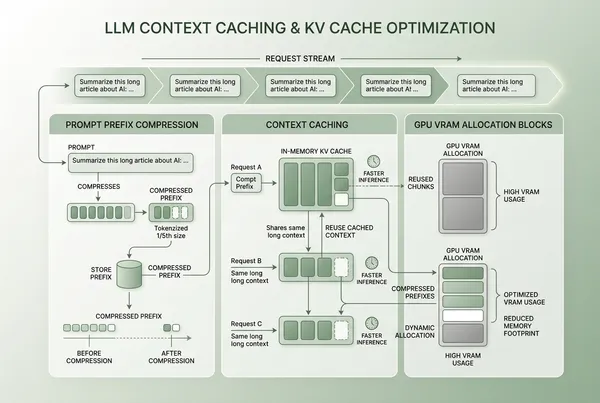
             └── YES ──> Long-Context Window with Context Caching
The Modern Hybrid Pattern: RAG + Fine-Tuned Small Language Models
In high-volume production, the winning architecture is rarely one extreme. Instead, leading systems deploy a RAG + SLM (Small Language Model) hybrid:
- Retrieval: Elastic search or Qdrant fetches the top 5 most relevant context snippets with strict access controls.
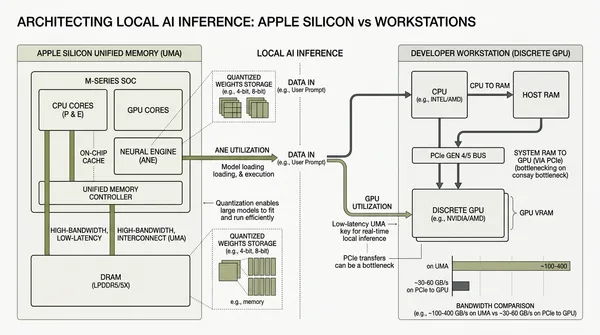
- Execution: A fine-tuned, quantized 8B or 14B model (trained on internal APIs and structured JSON outputs) generates the final response with sub-50ms latency.
By reserving massive frontier models for high-ambiguity planning and offloading deterministic execution to specialized local models, systems achieve both strict accuracy and low operating expenses.